Pine Nut Panellets

Welcome to Bombonería Pons, where autumn is dressed in flavour and tradition! At this time of year, when the leaves fall and the air is filled with the aroma of cinnamon and chocolate, there is a treasure that shines with special splendour: pine nut panellets.

Filter and sort Filter
9 products

What are pine nut panellets and why are they the most traditional variety?

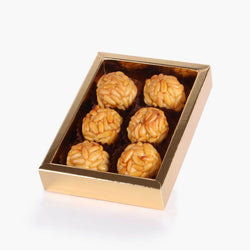
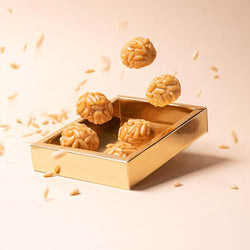
Pine nut panellets are the original and most iconic variety of this traditional Catalan sweet. They are made with a marzipan base (ground almonds, sugar and egg), which is completely coated in pine nuts before baking. This creates their characteristic golden, crunchy exterior, contrasting with the soft texture inside. Along with almond panellets, they are the oldest recipe and the foundation for all the other varieties we know today.

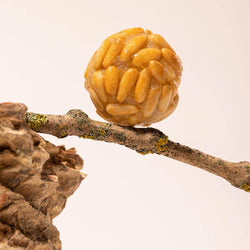
Their status as an undisputed classic is no coincidence: historically, pine nuts were one of the seasonal ingredients available in Catalonia during autumn, alongside almonds and chestnuts. This explains why they became the central ingredient in a sweet closely associated with All Saints’ Day. Today, when people refer to the traditional panellet recipe, they are almost always talking about this pine nut version, which artisan bakeries continue to make using methods passed down through generations. It also sets the quality benchmark against which other varieties are measured.

What is the traditional recipe for pine nut panellets?

The pine nut panellet recipe is simple in terms of ingredients, but it requires care during preparation to achieve the perfect balance of softness and golden colour. A typical batch of around 20–25 pieces combines ground almonds, sugar, one egg white to bind the dough and pine nuts for coating. Many recipes also include a little cooked potato or sweet potato to add moisture, along with some lemon zest to bring freshness to the flavour.

The process begins by mixing the almonds and sugar thoroughly, then adding the egg white until a smooth dough forms. The dough is left to rest for a few minutes to make it easier to handle. Next, small walnut-sized balls are shaped and generously coated in pine nuts, gently pressing them into the dough so they stick well. Finally, they are brushed with egg yolk to achieve their characteristic glossy, golden finish. Baking at around 180°C (350°F) for 10–12 minutes is the most delicate step: the panellets must be watched carefully to ensure the pine nuts are toasted without burning, while the inside retains its moist texture. This recipe has been passed down through generations in many Catalan families and remains the benchmark for anyone looking to make truly authentic homemade pine nut panellets.

What is the difference between pine nut and almond panellets?

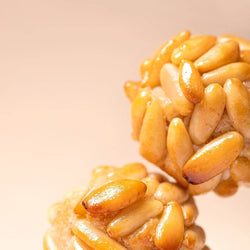
Although they are often mentioned together because they share the same marzipan base, pine nut and almond panellets are not exactly the same. Almond panellets are, in fact, the purest form of marzipan: a ball made from ground almonds, sugar and egg, with no additional coating, allowing the clean, delicate flavour of the almonds to take centre stage. Pine nut panellets, on the other hand, start with the same base but feature a complete coating of toasted pine nuts, adding a crunchy bite and a more complex flavour, somewhere between sweet and slightly resinous.

In practice, this creates two different tasting experiences: those who prefer a more delicate flavour and an evenly soft texture tend to choose almond panellets, while those looking for a contrast of textures (crunchy on the outside, soft on the inside) almost always opt for pine nut panellets. It is no coincidence that the latter are by far the most popular variety during the Castanyada, Catalonia’s traditional autumn celebration: pine nuts add the distinctive note that many people associate with “the real taste” of tradition, while almond panellets often serve as part of a wider assortment.

How many pine nuts go into a panellet, and where do they come from?

The amount of pine nuts in an artisan panellet is no minor detail: it is what sets a quality product apart from one made in a hurry. In a well-made traditional recipe, pine nuts should completely cover the surface of the marzipan ball, leaving no gaps or bare patches. In terms of proportions, this means using considerably more pine nuts than are often found in industrially produced panellets, where this costly ingredient is frequently used more sparingly.

In our bakery, we use locally sourced pine nuts: meatier, more flavourful and of higher value. We do not use pine nuts from other origins, as they do not deliver the flavour and texture expected from the traditional recipe.

Where can you buy authentic pine nut panellets in Barcelona?

Buying quality pine nut panellets in Barcelona means, above all, making sure the product contains a generous amount of locally sourced pine nuts and is artisan-made from start to finish. At Bombonería Pons, we prepare our pine nut panellets according to the traditional recipe, using carefully selected almonds and quality pine nuts in every piece, without shortcuts that could compromise the final flavour or texture.

Through our online store, you can conveniently buy pine nut panellets and choose the quantity you need, whether for your family to enjoy during the Castanyada or as a seasonal gift. If you prefer to combine them with other varieties, you can add chocolate panellets to your order or explore our full selection on the main panellets page, where you will find the entire range available in our store.